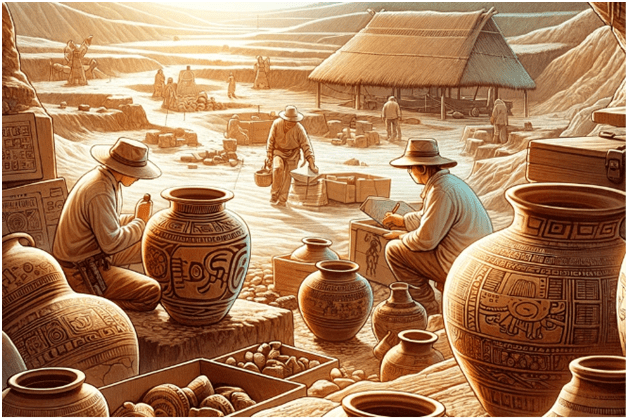
The Mystery of the Vinča Culture That Even Today Has No Definitive Answer
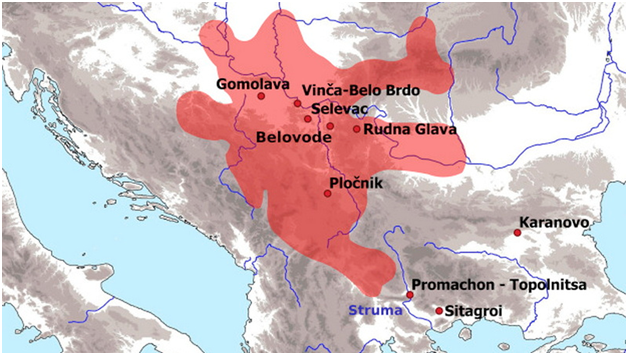
While most people believe that the first great civilizations emerged in Mesopotamia and Egypt, few outside this region know that on the territory of today’s Serbia, Romania, Bulgaria, and surrounding countries, more than seven thousand years ago there existed a culture that, by many indicators, was among the most advanced in Europe at the time.
Its name was the Vinča culture.
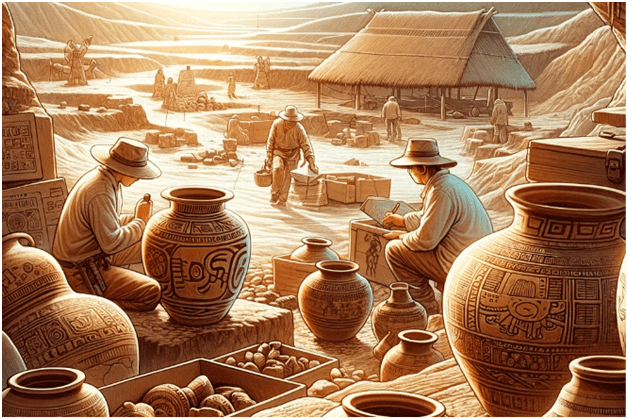
At a time when much of Europe was still inhabited by small groups of hunter-gatherers, the inhabitants of large Vinča settlements were building organized communities, developing crafts, engaging in long-distance trade, and creating works of art that still amaze archaeologists today.
Yet despite its level of development, this culture suddenly disappeared.
It left no written chronicles. No records of wars. No testimony of a catastrophe that struck it.
Only mystery remains.
A Civilization Ahead of Its Time
The Vinča culture was named after the archaeological site Vinča-Belo Brdo, located near Belgrade on the banks of the Danube.
The first serious archaeological excavations at this site began in the early 20th century, and what researchers discovered astonished the entire scientific community.
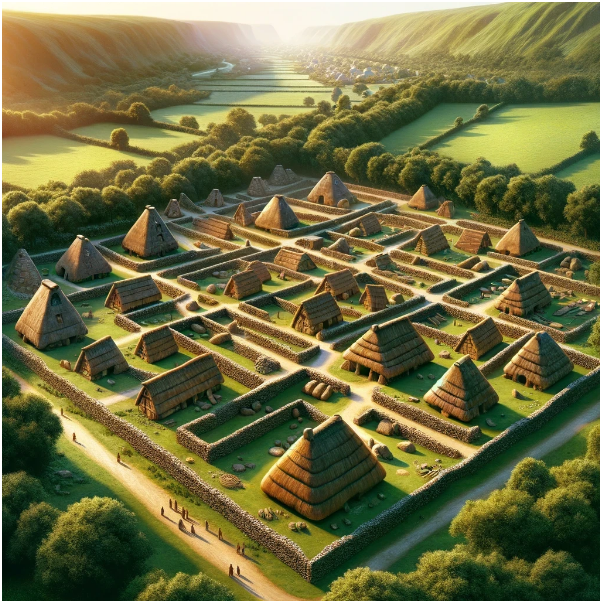
Beneath the layers of soil lay the remains of a large and highly developed settlement dating back between 6,500 and 7,000 years.
The houses were carefully planned.
Many had multiple rooms.
Hearths, ovens, tools, jewelry, figurines, and evidence of organized daily life—rare for Neolithic Europe—were all found.
An even greater surprise was the size of some settlements.
Some researchers estimate that the largest Vinča settlements may have housed several thousand people, placing them among the largest communities in Europe at the time.
At a moment when many European regions were sparsely populated, a culture flourished along the Danube that seemed far ahead of its era.
The First European Metallurgists?
One of the most fascinating facts about the Vinča culture is its connection to the early use of copper.
For a long time, it was believed that metallurgy originated in the Near East and then spread into Europe.
However, numerous finds suggest that the inhabitants of Vinča were among the first in Europe to experiment with metal processing.
Remains of copper smelting, as well as copper artifacts dating thousands of years before the Bronze Age, have been discovered at various sites.
This has led some scholars to speak of a technological revolution that was taking place precisely in the Balkans.
If these assumptions are correct, then the people of Vinča were among the pioneers of one of humanity’s most important technologies.
Mysterious Symbols Resembling Writing
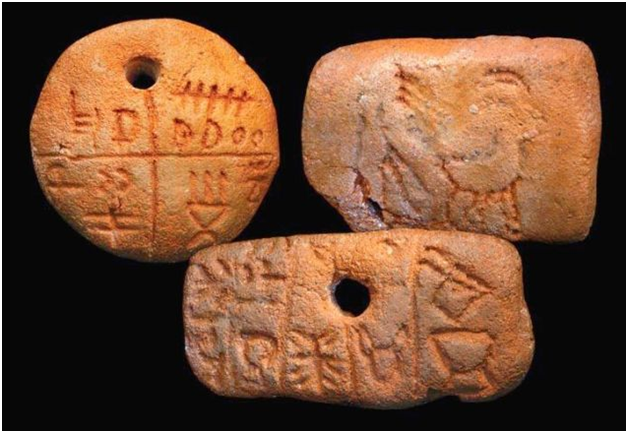
Perhaps the greatest public fascination comes from unusual signs found on pottery, figurines, and other objects.
At first glance, they resemble letters.
Some look like geometric symbols, while others appear as fragments of an unknown script.
For decades, scholars have debated their meaning.
Are they simple ownership marks?
Religious symbols?
Or perhaps the earliest form of writing in Europe?
Some scientists argue that these signs do not represent true writing, as there is no evidence they were used to record language.
Others believe they may represent an early stage in the development of writing systems.
No final consensus has been reached to this day.
As a result, the mysterious Vinča symbols remain one of Europe’s greatest archaeological enigmas.
A World Without Kings or Pyramids
Unlike Egypt or Mesopotamia, the Vinča culture left no monumental architecture.
No pyramids.
No royal tombs.
No evidence of powerful rulers.
This has led researchers to suggest that society was organized in a different way.
It is possible that communities functioned with a relatively even distribution of wealth and power.
Although social organization clearly existed, there is no strong evidence of a small elite controlling the majority of the population.
Because of this, some archaeologists describe Vinča as one of the most stable and peaceful Neolithic societies in Europe.
Yet even stability was not enough to prevent its disappearance.
The Beginning of the End
Somewhere between 4,700 and 4,500 BCE, signs of change begin to appear.
Large settlements are gradually abandoned.
Trade networks weaken.
Population declines.
Some settlements are burned.
Others simply disappear.
Within a few centuries, a culture that had dominated the region for hundreds of years almost completely vanishes.
But what happened?
Even today, this question has no definitive answer.
Climate Change Theory: Did Nature Decide the Fate of the Vinča Culture?
One of the most widely accepted explanations involves climate change.
Archaeological and geological data indicate that during this period there were changes in temperature and precipitation levels.
If crops failed for several consecutive years, the consequences could have been catastrophic.
Populations dependent on agriculture would have been forced to migrate in search of more fertile land.
Such migrations could have led to the collapse of large settlements and the gradual disappearance of the culture.
Among the many explanations for the disappearance of the Vinča culture, climate change is considered one of the most important in modern scientific debates. Although there is still no single answer as to why large settlements were gradually abandoned, increasing evidence suggests that the natural environment may have played a decisive role.
The inhabitants of Vinča were primarily farmers. Their survival depended on successful grain production, access to water, soil quality, and stable seasons. Unlike modern societies, which can transport food over long distances, Neolithic communities were almost entirely dependent on their immediate surroundings.
Therefore, even relatively small climatic changes could have had serious consequences.
What Do Geological Evidence Show?
In recent decades, scientists have analyzed sediment layers from lakes, marshes, and river valleys across southeastern Europe. These layers preserve traces of ancient climates: pollen, microscopic biological remains, soil composition, and other indicators.
Results from multiple studies suggest that between 5,000 and 4,500 BCE, changes occurred that affected much of the Balkans.
Some regions show signs of increased drought, while others show changes in rainfall patterns and more frequent flooding. Such fluctuations could have severely disrupted agricultural production, on which the entire Vinča economy depended.
Pollen analysis is particularly revealing. In certain layers from this period, there is a decline in plant species associated with wetter conditions, while drought-resistant species become more common. For climatologists and paleoecologists, this is a strong signal that environmental conditions were changing.
The Danube – A Ally That Could Become a Problem
Vinča settlements were often built near large rivers, especially the Danube and its tributaries. This location provided access to water, fishing, fertile land, and trade routes.
However, rivers could also become a serious threat if climate patterns changed.
Many researchers believe that more frequent flooding may have endangered certain settlements. Some archaeological sites show layers of river sediment indicating significant hydrological changes during the later phase of the Vinča culture.
If fertile fields were regularly flooded or destroyed, populations may have been forced to relocate.
Hunger That Does Not Come Suddenly
When discussing climate change, it is often imagined as a sudden catastrophe. However, it is far more likely that the process was slow and gradual.
One or two poor harvests would not destroy an advanced society. But decades of reduced yields could have serious consequences.
Less food leads to population decline.
A smaller population means less labor.
Less labor leads to lower production.
A downward spiral begins.
In such conditions, people often make a rational decision: they abandon large settlements and move into smaller, more adaptable communities.
Evidence from Animal Bones
Additional insights come from animal remains found at archaeological sites.
Analyses show that changes occurred in livestock practices during the later phases of the Vinča culture. Some researchers believe these changes reflect adaptation to new environmental conditions.
If pastures became less productive or seasonal conditions changed, people would have had to adjust animal husbandry practices. While this alone does not prove a climate crisis, it contributes to a broader picture of increasing environmental pressure.
Was There an “Ecological Collapse”?
A more modern hypothesis combines climate change with human activity.
According to this theory, the inhabitants of the Vinča culture extensively deforested land over centuries to build houses, provide heating, and expand agricultural fields.
When combined with climate shifts, the consequences could have been severe.
Without forest cover, soil becomes more prone to erosion.
Its ability to retain moisture decreases.
Agricultural productivity becomes less stable.
In other words, climate change may not have destroyed Vinča alone, but rather intensified existing problems caused by long-term resource exploitation.
Why Are Scientists Still Unsure?
Despite all these indicators, there is no conclusive proof that climate was the sole cause of the Vinča culture’s disappearance.
Archaeology rarely offers simple answers.
Climate change may have reduced agricultural production.
This may have triggered population migration.
Migration may have caused social changes, weakening trade networks and leading to the collapse of large settlements.
In this scenario, climate would not be the direct “killer” of Vinča, but rather the first domino in a chain of events.
Was the Problem Success?
There is another interesting theory.
According to it, the Vinča culture may have fallen victim to its own success.
As settlements grew, more wood was needed for construction and heating.
More farmland was required.
More food.
More resources.
Over time, pressure on the environment may have become too great.
Forests disappeared.
Soil became exhausted.
Large communities became increasingly difficult to sustain.
Eventually, people may have chosen to leave overcrowded settlements and adopt a different way of life.
At first glance, this seems paradoxical, but some archaeologists believe that the Vinča culture did not collapse due to poverty, war, or natural disaster, but precisely because of its extraordinary success.
Population Explosion
Radiocarbon analyses from numerous sites indicate that the population of the Vinča culture increased sharply after 5300 BCE. Over the following centuries, some of the largest prehistoric settlements in Europe emerged. Researchers estimate that population growth was so rapid that it created pressures previously unknown to Neolithic societies.
More people meant more food.
More food meant more farmland.
More farmland meant more deforestation.
This process may have continued for generations, almost unnoticed, until natural resources began to show signs of depletion.
Hunger for Wood
For the people of Vinča, wood was what oil, gas, and electricity are today.
It was used for building houses.
For heating.
For firing pottery.
For copper processing.
For tools and everyday objects.
Each new house required large amounts of wood. When combined with thousands of people over centuries, it is easy to imagine the scale of deforestation around major settlements.
A Tired Land
Agriculture posed another serious challenge.
Unlike modern farmers, Vinča people had no artificial fertilizers or advanced soil restoration methods.
The same fields were cultivated for generations.
Wheat, barley, and other crops gradually depleted soil nutrients.
Yields declined.
At first slightly.
Then increasingly.
Even small annual declines, over generations, could become a serious problem for communities of thousands.
Early Signs of Overpopulation?
Large settlements also bring organizational challenges unrelated to climate or agriculture.
The larger the community, the harder it is to organize food production, resource distribution, and conflict resolution.
Archaeologists use the term “scalar stress” to describe problems that arise when population exceeds the capacity of existing systems.
Some Vinča settlements were significantly larger than earlier Neolithic communities, potentially requiring entirely new forms of social organization.
Decline of Trade Networks
The strength of Vinča was not only agriculture.
It was also its extensive trade network.
Obsidian came from what is now Hungary and Slovakia.
Shells came from the Aegean Sea.
Copper ore was transported from various Balkan regions.
However, toward the end of the Vinča period, evidence suggests these networks weakened. Regional centers changed roles, and long-standing systems of exchange lost cohesion.
Collapse Without Catastrophe
The most interesting aspect of this theory is that it does not assume a single catastrophic event.
No volcano.
No great battle.
No single decisive moment.
Instead, it describes a slow process lasting centuries.
Population grows.
Forests recede.
Soil yields decline.
Trade weakens.
Settlements become harder to maintain.
People move into smaller, more adaptable communities.
In this scenario, the Vinča culture did not “disappear” in the classical sense.
It gradually transformed, dispersed, and lost its recognizable identity.
Arrival of New Peoples: Did Vinča Disappear or Simply Merge Into a New World?
Some researchers believe that migrations of new populations from the eastern steppes played an important role.
During the following millennia, the Balkans and Europe experienced major demographic changes.
New groups likely settled in the region, altering existing social and cultural patterns.
In this view, the Vinča culture did not vanish overnight.
Its people simply merged with new populations, leaving traces of their heritage for future generations.
One of the most intriguing theories suggests that the end of the Vinča culture was not the result of famine, disease, or war, but rather contact with new populations that began appearing in the Balkans during the late Neolithic and Eneolithic periods.
In other words, Vinča may not have been destroyed.
It may simply have ceased to exist as a distinct culture.
First Signs of Large Migrations
The period between 4700 and 4000 BCE was a time of major change across southeastern Europe.
As Vinča settlements weakened, new pastoral and agricultural communities developed in regions north of the Black Sea and east of the Carpathians.
Archaeological and genetic data suggest this area became one of the main centers of migrations that would later reshape Europe.
Prehistoric Europe was far more mobile than previously believed.
People traded, married, migrated, and founded new settlements over distances of hundreds of kilometers.
In such a world, no culture was fully isolated.
What Do Archaeological Findings Show?
One of the key arguments is that no major population gap appears after the decline of the Vinča culture in the Balkans.
People did not disappear.
Settlements did not become empty.
Instead, archaeologists observe gradual changes in material culture.
Pottery styles change.
Tools change.
Customs change.
New styles appear that no longer belong to the classical Vinča world.
Genetics Changes the Picture of the Past
A major breakthrough came with ancient DNA analysis.
Over the past fifteen years, scientists have been able to extract genetic material from ancient bones and compare populations.
Results show that European populations underwent multiple waves of mixing during prehistory.
Particularly significant were migrations from the Pontic-Caspian steppe (modern Ukraine and southern Russia).
Although the major “Yamnaya expansion” occurred after the Vinča culture, genetic data suggest that movements between the steppe, the Balkans, and northern Black Sea regions began much earlier.
This means that Vinča inhabitants were likely already in contact with other populations for centuries.
Cultural Assimilation Instead of Conquest
One key reason this theory is compelling is the lack of evidence for large-scale warfare.
No mass graves.
No fortified cities.
No large quantities of weapons.
No signs of violent destruction.
Therefore, many scholars consider gradual assimilation more likely.
New groups did not need to conquer Vinča.
They could simply settle nearby, establish trade, intermarry, and slowly reshape the social structure.
After several generations, the old culture could lose its identity without a single major battle.
Evidence from Trade
Vinča culture was connected by complex exchange networks spanning much of the Balkans and the Danube region.
As these networks weakened, local communities became more open to new economic and cultural influences.
Archaeologists note that regional centers gradually transformed, and the once unified cultural space became increasingly diverse.
Perhaps the Vinča People Are Our Ancestors
The most intriguing implication of this theory is that Vinča people did not disappear.
Their descendants likely continued living in the Balkans, mixing with incoming groups and contributing to later Copper Age and Bronze Age cultures.
In this case, the question “What happened to Vinča?” may be the wrong one.
The real question is:
How did Vinča change?
Because history rarely has clear endings. Civilizations almost never disappear overnight. They transform, adapt, and merge with new worlds, leaving traces that archaeologists uncover thousands of years later.
A Mystery That Endures
More than seven thousand years later, answers still remain elusive.
No written records describe Vinča’s final days.
No witnesses.
No historical sources.
Only traces in the soil, fragments of pottery, remains of houses, and symbols that we still cannot fully interpret.
Perhaps that is why the Vinča culture continues to fascinate.
Unlike many ancient civilizations whose histories we know, Vinča still forces us to ask questions.
How did they live?
How did they speak?
What did they believe?
And most importantly:
How can one of the most advanced cultures of its time almost vanish without a trace?
As archaeologists continue excavations along the Danube, the mystery remains open.
Perhaps the answer already lies beneath an undiscovered layer of earth.
Or perhaps Vinča will forever remain one of Europe’s greatest lost civilizations.
D. Tovarisic

